Protection Systems That Support Infrastructure Growth
Conduit Installation in Willow River for fiber optic systems and underground utility expansion projects
Underground conduit systems provide long-term protection for fiber optic cables and utility infrastructure while allowing future network expansion without requiring additional excavation or drilling. Conduit pathways route utilities through durable plastic tubing that shields cables from soil moisture, ground movement, and physical damage that would otherwise shorten system lifespan or require costly repairs. Buckshot Construction LLC installs conduit for telecommunications providers, commercial developments, and municipal infrastructure projects throughout Willow River and the broader Minnesota region, with installation methods selected based on pathway distance, terrain conditions, and the number of utilities the system must accommodate.
Conduit installation involves positioning tubing along planned utility routes using direct bury plowing, trenching, or directional drilling depending on site conditions and the need to minimize surface disruption. The conduit is sized to handle current cable requirements while providing capacity for future installations, which allows network operators to add circuits or upgrade service without repeating the full installation process.
Request installation planning assistance to review conduit routing and capacity requirements for your infrastructure project.
What Changes After Conduit Systems Are Installed
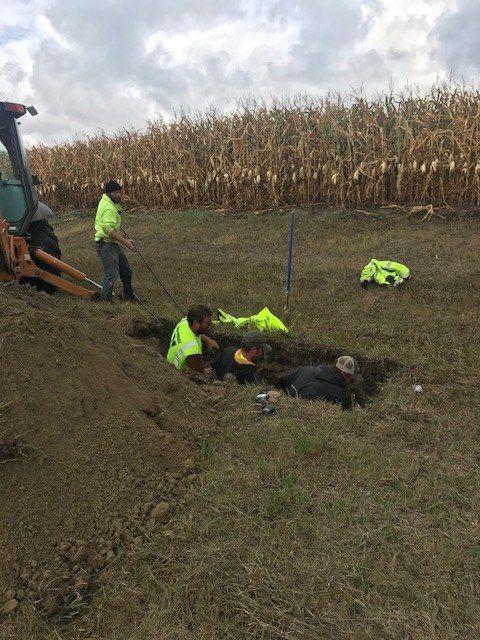
Conduit installation begins with pathway verification to confirm routing avoids conflicts with existing utilities and maintains required separation distances from water, gas, and electric systems. The tubing is positioned at consistent depth to protect cables from frost heave and surface damage, with junction boxes or pull boxes placed at intervals along the route to facilitate cable installation and provide access for future maintenance or upgrades. Installation crews use specialized equipment to feed conduit through bore holes created by directional drilling or place tubing directly into trenches excavated for longer pathway segments that cross open terrain.
Once conduit is in place, fiber optic cables can be pulled through the tubing without exposing them to soil contact, moisture intrusion, or tension damage that occurs during direct burial installations. The conduit protects cables from rodent damage, root intrusion, and ground shifting that gradually degrades direct-buried systems over time. Network operators gain the ability to add new cables by pulling them through existing conduit, which reduces future installation costs and avoids repeated excavation that damages landscaping or disrupts property use.
The system includes proper sealing at conduit entry points to prevent water accumulation inside the tubing, which would otherwise create ice blockages during freezing temperatures or allow moisture to reach cable jackets and degrade signal transmission. Projects in commercial developments often involve multiple conduit runs to separate telecommunications, security, and data infrastructure, while rural installations may use single-conduit systems designed for straightforward fiber optic deployment across longer distances.
Questions Before Starting Your Project
Conduit systems vary in complexity based on infrastructure requirements, and installation methods are selected to match project scope and site conditions throughout the Midwest.
What conduit size is needed for fiber optic installations?
Most fiber optic projects use 1.25-inch or 2-inch conduit depending on cable count and future expansion plans, with larger sizes specified when multiple cables or future capacity upgrades are anticipated.
How does conduit installation differ from direct cable burial?
Conduit provides a protective pathway that allows cables to be pulled through tubing rather than buried directly in soil, which simplifies future installations, protects cables from environmental damage, and extends system lifespan compared to direct burial methods.
What installation method is used for long conduit runs across rural terrain?
Direct bury plowing places conduit underground in a single continuous operation across open areas, while directional drilling is used where conduit must cross roads, driveways, or areas where surface excavation is not practical.
Why are pull boxes installed along conduit pathways?
Pull boxes provide access points where cables can be fed into the conduit and reduce tension during cable installation by breaking long runs into shorter segments, which prevents cable damage and simplifies maintenance or future upgrades.
How does conduit installation in Minnesota account for frost depth?
Conduit is placed below the local frost line, typically 42 to 60 inches depending on location, to prevent frost heave from shifting the tubing or creating stress points that could damage cables during seasonal ground movement.
Buckshot Construction LLC coordinates conduit installation for expanding broadband infrastructure, commercial utility systems, and municipal telecommunications projects across Minnesota and the Midwest. Reach out to discuss routing requirements, capacity planning, and installation scheduling for your conduit system project.