
Installation Methods Built for Long Rural Routes
Direct Bury Plowing in Willow River for fiber optic infrastructure and long-distance telecommunications projects
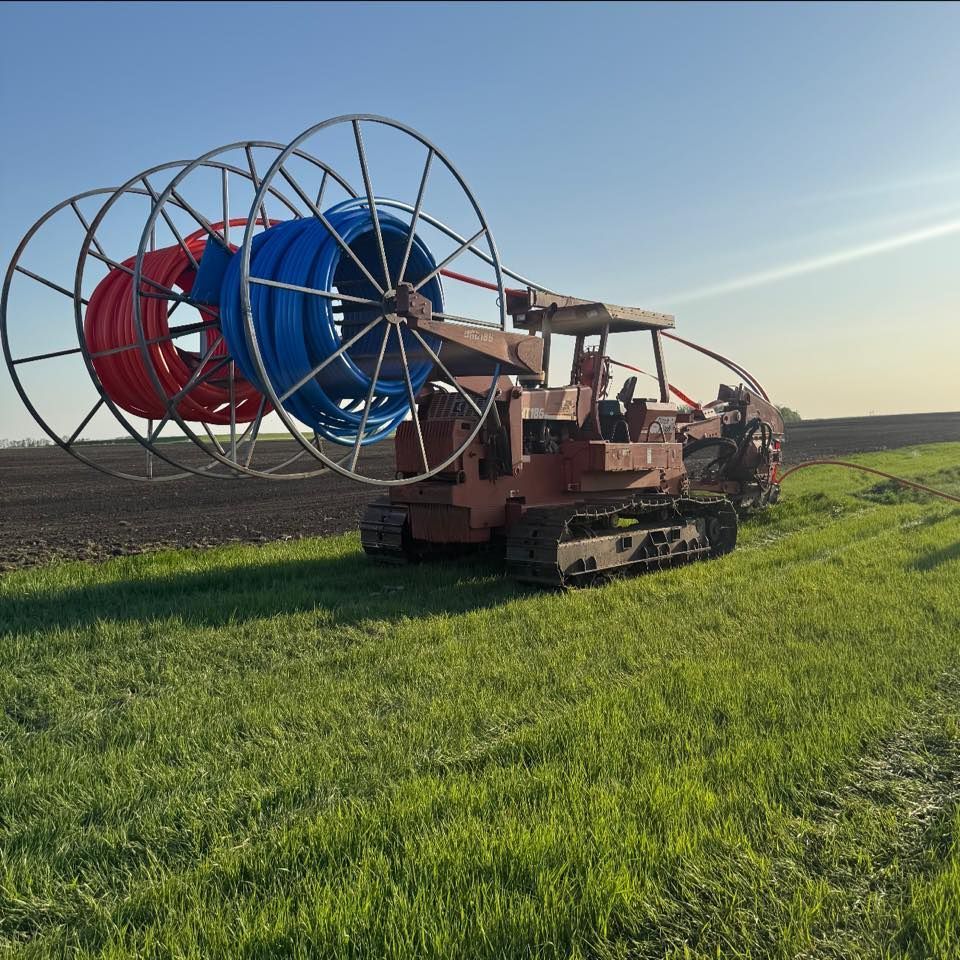
Long-distance fiber optic installations across rural terrain require installation methods that minimize surface disruption while maintaining efficient project timelines. Direct bury plowing opens a narrow subsurface pathway, positions fiber optic cable or conduit at the required depth, and closes the trench in a single continuous operation, eliminating the need for separate excavation, cable placement, and backfilling steps that slow traditional installation methods. Buckshot Construction LLC uses direct bury plowing for telecommunications and utility projects throughout Willow River and the greater Midwest region, with equipment capable of handling varying soil conditions, terrain obstacles, and project-specific depth requirements.
The plowing process cuts a vertical slot through the soil using a specialized plow blade, feeds cable or conduit through a chute positioned at the base of the blade, and allows the soil to close naturally behind the equipment as it advances. This approach reduces the width of surface disturbance to a few inches rather than the several feet required for traditional trenching, which limits landscape damage and speeds site restoration after installation is complete.
Request a project estimate to evaluate direct bury plowing for your upcoming fiber installation or utility expansion work.
What You Notice Once Plowing Work Is Finished
Direct bury plowing equipment adjusts blade depth to position cable below the frost line while avoiding excessive depth that complicates future access for repairs or network expansion. The narrow installation pathway reduces the amount of topsoil disturbance, which allows vegetation to reestablish quickly and limits the need for extensive landscape restoration or reseeding after project completion. Installation crews adjust travel speed based on soil density, moisture content, and the presence of subsurface rock that requires pathway rerouting to avoid damaging cable during placement.
After plowing is complete, the installation pathway becomes nearly invisible once vegetation regrows, and property use returns to normal within weeks rather than the months required for landscape recovery after traditional trenching. The cable remains protected at consistent depth along the entire route, reducing the risk of damage from surface activity or shallow excavation during future construction. Projects covering multiple miles are completed faster than excavation-based methods, which reduces labor costs and shortens the timeline between project start and service activation.
The method works best across open terrain where equipment can maintain continuous forward movement, while areas with dense subsurface obstacles, heavy rock formations, or existing underground infrastructure may require directional drilling or traditional trenching to complete the installation safely. Utility contractors use direct bury plowing to reduce project costs and accelerate installation timelines on rural broadband expansion projects where long cable runs connect distant service areas.
Common Questions About This Service
Direct bury plowing handles long-distance installations efficiently, but project conditions and terrain characteristics affect whether this method is suitable for specific utility routes.
What soil conditions work best for direct bury plowing?
The method handles most soil types effectively, including clay, loam, and sandy soils common throughout Minnesota, but heavy rock layers or frozen ground may require alternative installation methods or seasonal scheduling adjustments.
How does plowing reduce surface disruption compared to trenching?
Traditional trenching removes a pathway several feet wide and requires separate backfilling and compaction, while plowing creates a narrow slot that closes naturally, leaving minimal visible disturbance and reducing landscape restoration requirements.
What installation depth is used for fiber optic cable plowing?
Cable is typically placed between 30 and 48 inches below grade to position it below the frost line and protect it from surface damage, with exact depth adjusted based on local frost penetration and project specifications.
Why is direct bury plowing preferred for long rural fiber routes?
The method completes installation in a single pass, which reduces labor requirements and accelerates project timelines across multi-mile routes where equipment can maintain continuous movement without frequent repositioning or staging.
What happens when plowing equipment encounters obstacles underground?
Crews use utility locating to identify existing infrastructure before plowing begins, and the installation pathway is adjusted to route around obstacles or switch to directional drilling where subsurface conflicts prevent continuous plowing.
Buckshot Construction LLC provides direct bury plowing services for utility contractors, telecommunications providers, and project managers coordinating infrastructure expansion across Minnesota and the Midwest. Arrange a consultation to review site conditions, project scope, and scheduling for your fiber optic or underground utility installation.