
Connectivity Infrastructure That Reaches Rural Communities
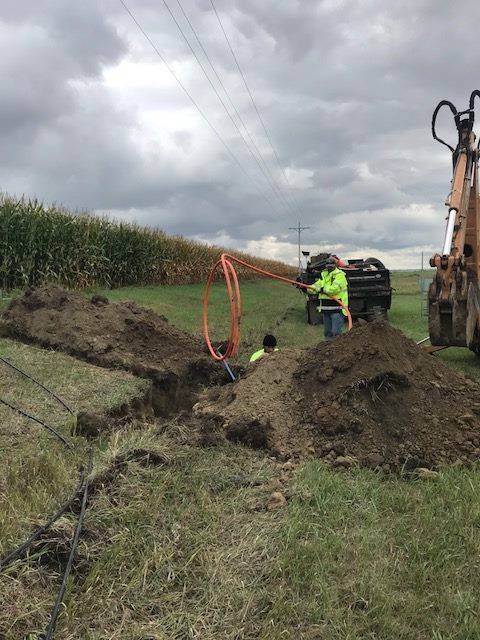
Fiber Optic Cable Installation in Willow River for broadband expansion and telecommunications infrastructure projects
Expanding broadband access into rural and underserved areas requires fiber optic cable installation that accounts for long distances, varying terrain, and the need to protect cables from environmental exposure and physical damage. Buckshot Construction LLC installs fiber optic cable systems for telecommunications providers, municipalities, and commercial developments throughout Willow River and the broader Minnesota region, with project experience extending across North Dakota, South Dakota, and Iowa. Installation methods are selected based on project distance, terrain conditions, and the need to maintain efficient timelines while protecting long-term fiber performance.
Fiber optic installation involves routing cable through underground conduit systems or direct burial pathways, depending on whether the infrastructure requires future access for expansion or repair. The cable is positioned to avoid tension damage during placement and protected from moisture intrusion, which degrades signal transmission over time if installation methods allow water to enter splice enclosures or cable jackets.
Discuss your fiber expansion project to review routing options and installation methods suited to your service area.
How Fiber Installation Addresses Rural Connectivity Gaps
Fiber optic installation begins with pathway planning to identify the most efficient routing between network nodes while accounting for property access, existing infrastructure conflicts, and terrain obstacles that affect installation methods. Cable is pulled through pre-installed conduit or placed directly into the ground using specialized plowing equipment that opens a narrow trench, positions the cable at the required depth, and closes the trench in a single pass. This approach reduces surface disruption and accelerates project completion compared to traditional excavation methods that require separate trenching, cable placement, and backfilling operations.
After installation is complete, telecommunications providers can deliver high-speed broadband service to homes and businesses that previously relied on slower DSL or satellite connections. The fiber infrastructure remains functional for decades without requiring replacement, and underground placement protects cables from storm damage, vehicle contact, and vandalism that affect above-ground utility lines. Signal transmission performance remains consistent regardless of distance from the network hub, unlike copper-based systems that lose speed and reliability as distance increases.
The installation process includes splice work to connect cable segments and termination at network access points, ensuring that signal loss remains within acceptable specifications across the entire route. Projects often involve coordination with utility providers to maintain service timelines and ensure that new fiber infrastructure integrates properly with existing network equipment and service delivery systems.
Answers to Frequent Service Questions
Fiber optic installation projects vary in scope from short commercial property connections to multi-mile rural routes, and installation methods are selected based on terrain, distance, and infrastructure requirements.
What installation method is used for long rural fiber routes?
Direct bury plowing places fiber optic cable underground in a single operation, opening a narrow pathway, positioning the cable at depth, and closing the trench simultaneously, which accelerates installation across open terrain compared to traditional excavation.
How does underground placement protect fiber optic performance?
Fiber cables installed below the frost line avoid damage from ground movement during freeze-thaw cycles, and underground placement eliminates exposure to storm damage, falling limbs, and vehicle contact that interrupts service on above-ground utility lines.
What happens if fiber cable needs to cross roads or developed areas?
Directional drilling bores a pathway beneath paved surfaces and existing infrastructure without excavating the road or interrupting traffic, allowing fiber installation to proceed without requiring permits for road closure or surface restoration work.
How is fiber optic cable protected from moisture damage during installation?
Cable is routed through sealed conduit systems or installed with moisture-blocking gel that prevents water intrusion into the fiber strands, and splice enclosures are sealed to block moisture at connection points where cable segments join.
Why does rural fiber installation take longer than urban projects?
Rural installations cover greater distances between service points, require equipment mobilization across larger project areas, and often involve coordination with multiple property owners for access permissions, which extends project timelines compared to compact urban installations where service points are closely spaced.
Buckshot Construction LLC supports telecommunications infrastructure growth across Minnesota and the Midwest, with installation practices designed for efficient project completion and durable fiber optic system performance. Contact us to schedule planning assistance for your broadband expansion or commercial fiber installation project.